
A Rare OTO Archival Restoration by Crave Book Restorations.
Stanley, Tasmania
From Ruin to Readability — A Book Reborn Across Generations
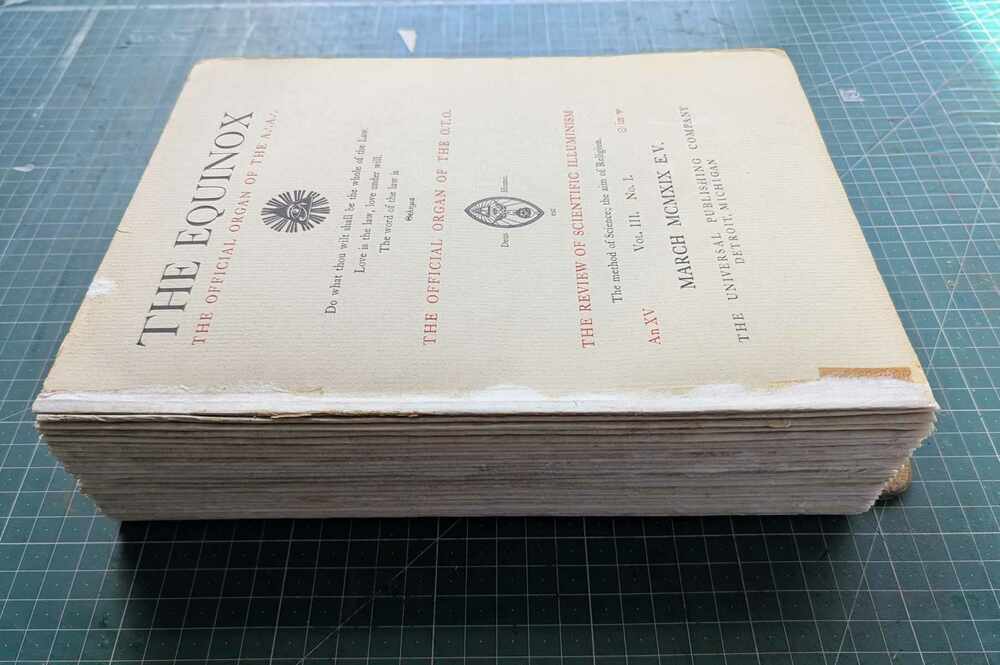
There are books, and then there are artefacts. This restoration project — a volume of The Equinox, Vol 3. Number 1.— sits firmly in the latter category. Not simply a text, but a vessel of lineage, wisdom, history – a transmission – across continents and decades.
This particular copy was in a state that most would consider beyond saving: structurally collapsed, spine destroyed, gatherings loose, and covers detached.
This is the story of how that artefact was brought back to life.
Provenance: A Lineage of Custodianship
This volume of The Equinox carries a direct and significant lineage within Ordo Templi Orientis.
It was formerly owned by Jack Parsons — pioneering rocket scientist, co-founder of the Jet Propulsion Laboratory, and a central figure in the early American OTO. Working at the intersection of science and esoteric practice, Parsons’ personal library represents a unique convergence of those worlds.
From Parsons, the book passed into the care of Grady Louis McMurtry, U.S. Army officer and later head of the OTO. McMurtry was instrumental in preserving and re-establishing the Order in the mid-20th century, acting under authority to maintain its continuity.
The volume was later gifted to the Order in Australia by Hymenaeus Beta, the present Outer Head of the Order (O.H.O.), ensuring its continued custodianship within the living body of the OTO.
This is not simply a book — it is a working talisman that has moved through the hands of those who shaped the modern history of the Order.
A Book at the Edge
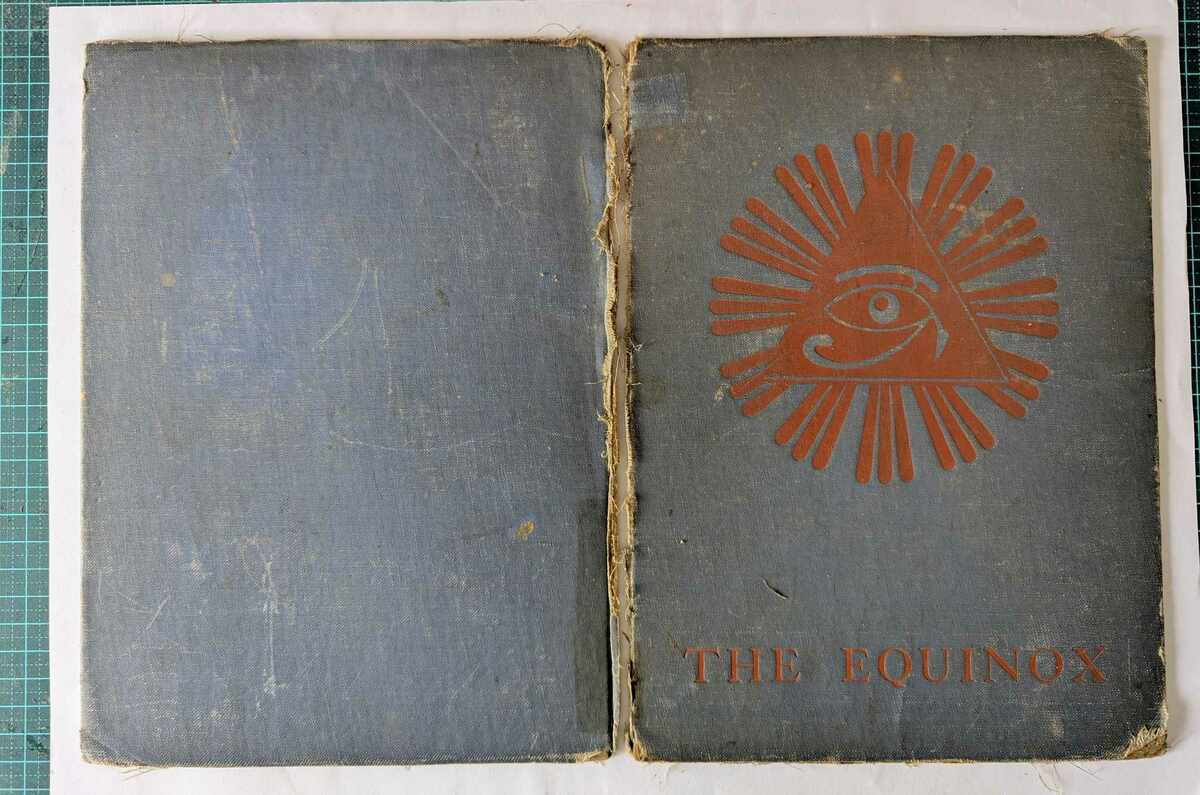
This book did not simply show its age; it had surrendered to it. The spine had long since failed, collapsing under the accumulated strain of time and handling. The text block had fractured into loose gatherings, their folds weakened, their edges softened and frayed. The covers, once protective, now hung apart like relics of a former structure.
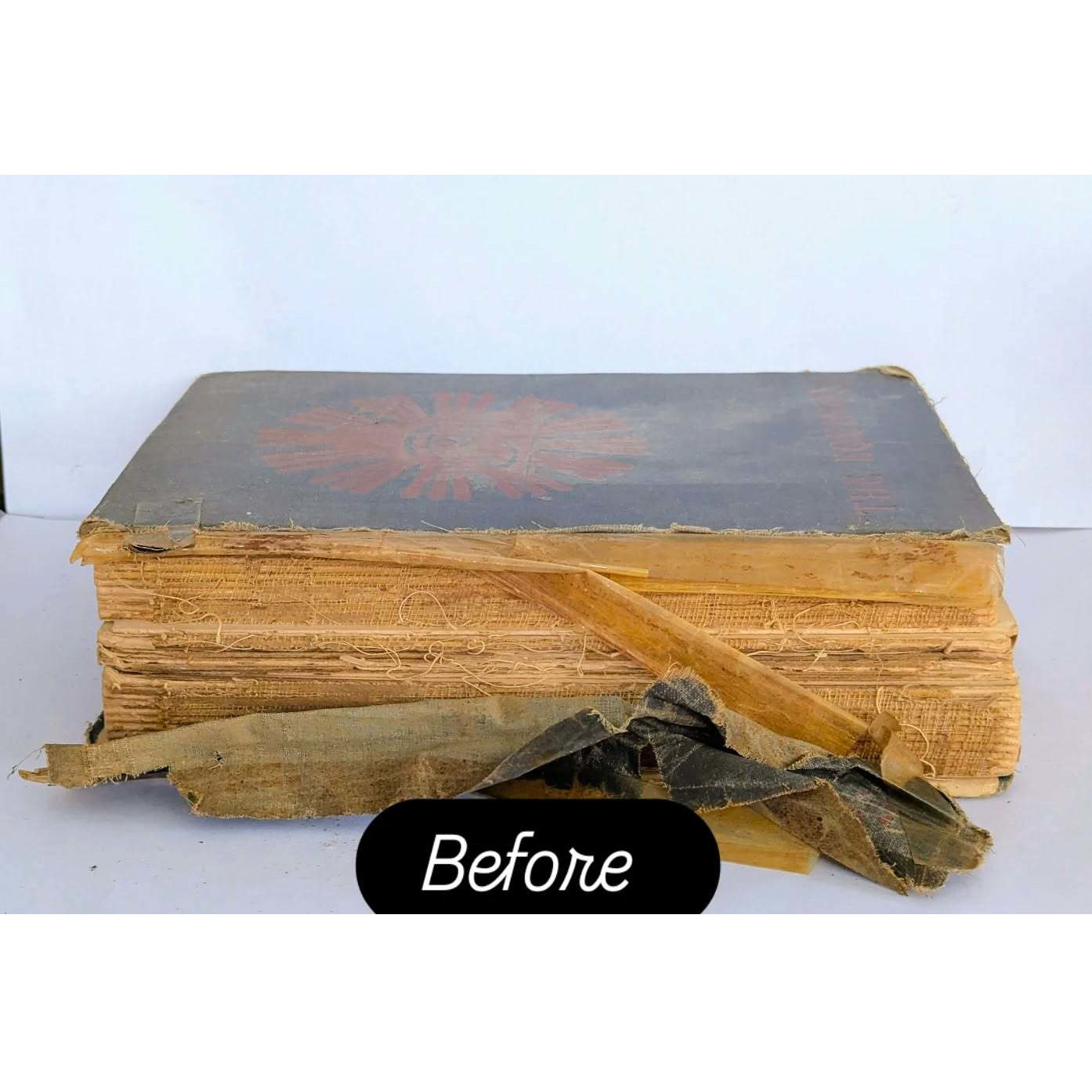
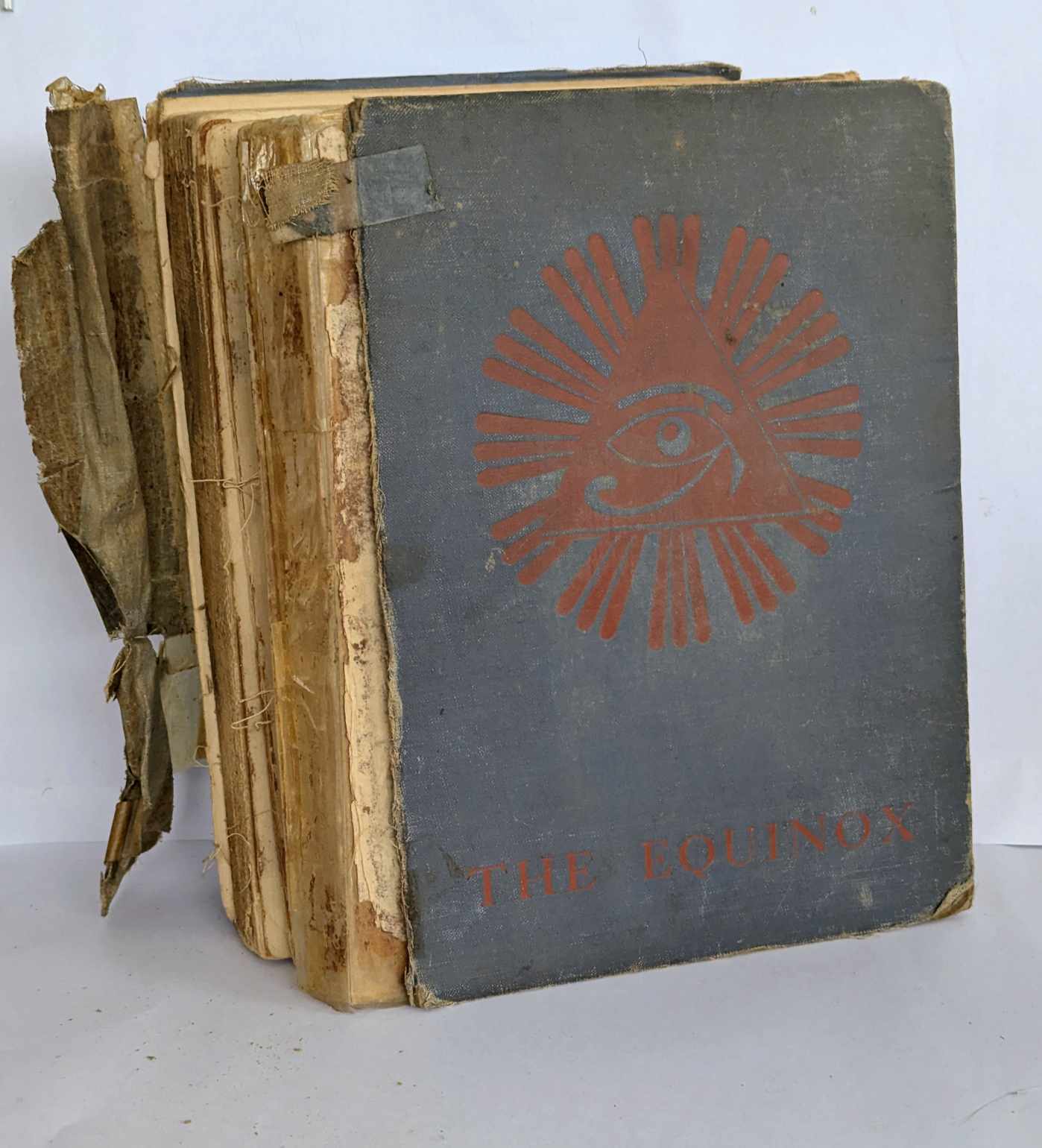
The decision was not whether to restore it — but how to do so without erasing its history.
Taking It Apart to Save It
Restoration begins with a paradox: to preserve the book, it must first be dismantled.
Each section was carefully separated, not torn free but eased apart along the lines where the original structure had already failed. Old adhesives, now brittle and unreliable, released their hold with patience rather than force.
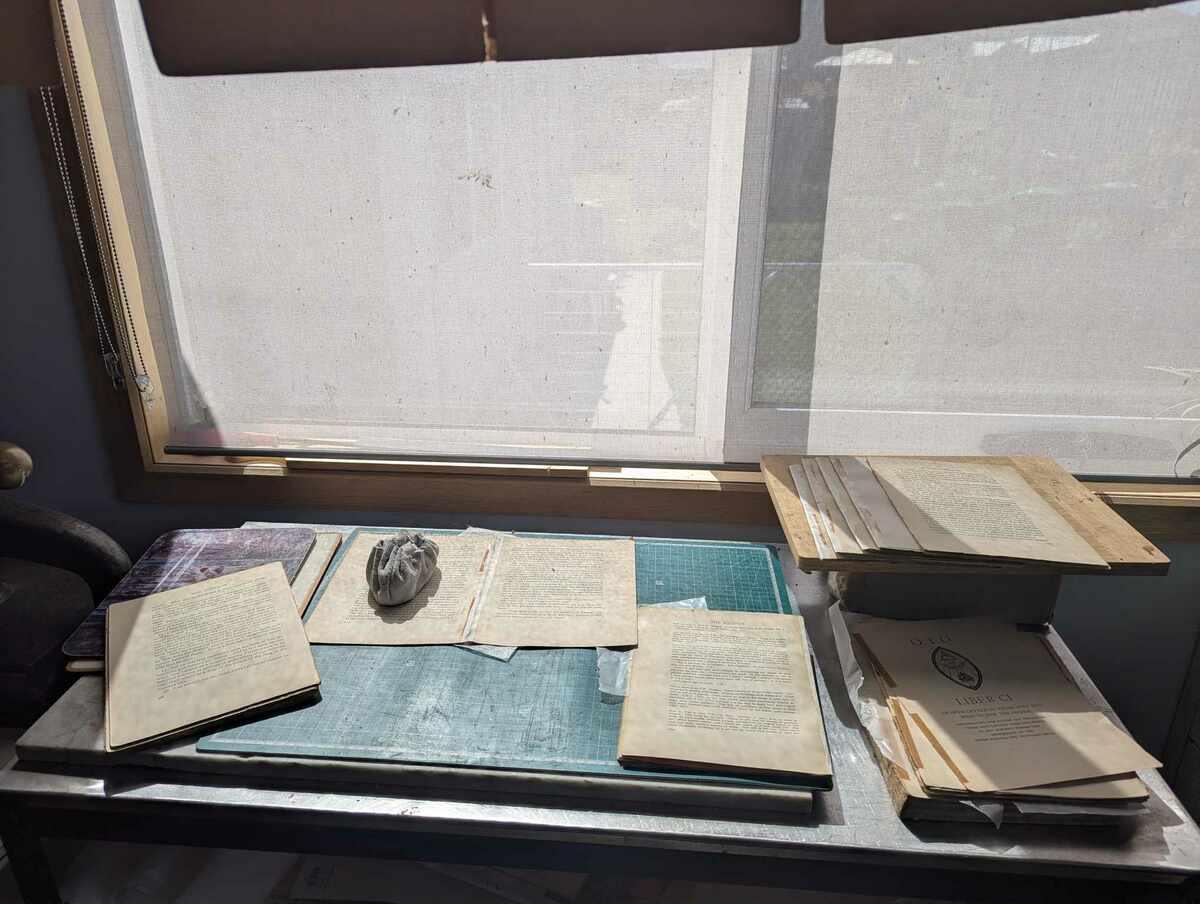
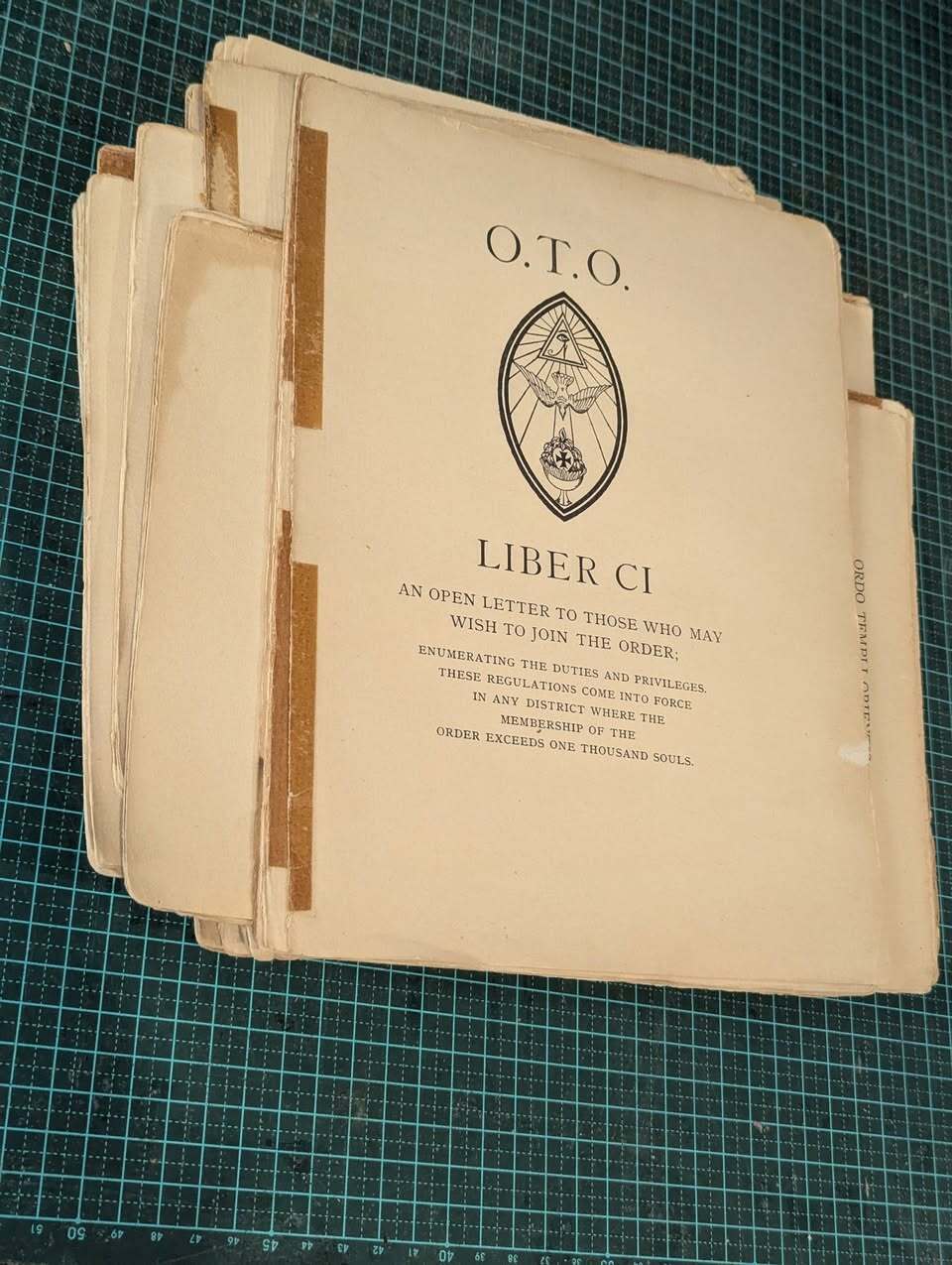
Handling these pages is a negotiation. Too much intervention, and the past is erased. Too little, and the future is compromised.
Rebuilding strength by delicacy
The folds — the quiet hinges of every book — had weakened over time. These are the points that endure the most stress, and here, the damage was most evident.
To restore strength without introducing rigidity, each fold was “guarded” — reinforced with fine, sympathetic materials that support without dominating. This is delicate work, almost invisible when done well, but absolutely essential.
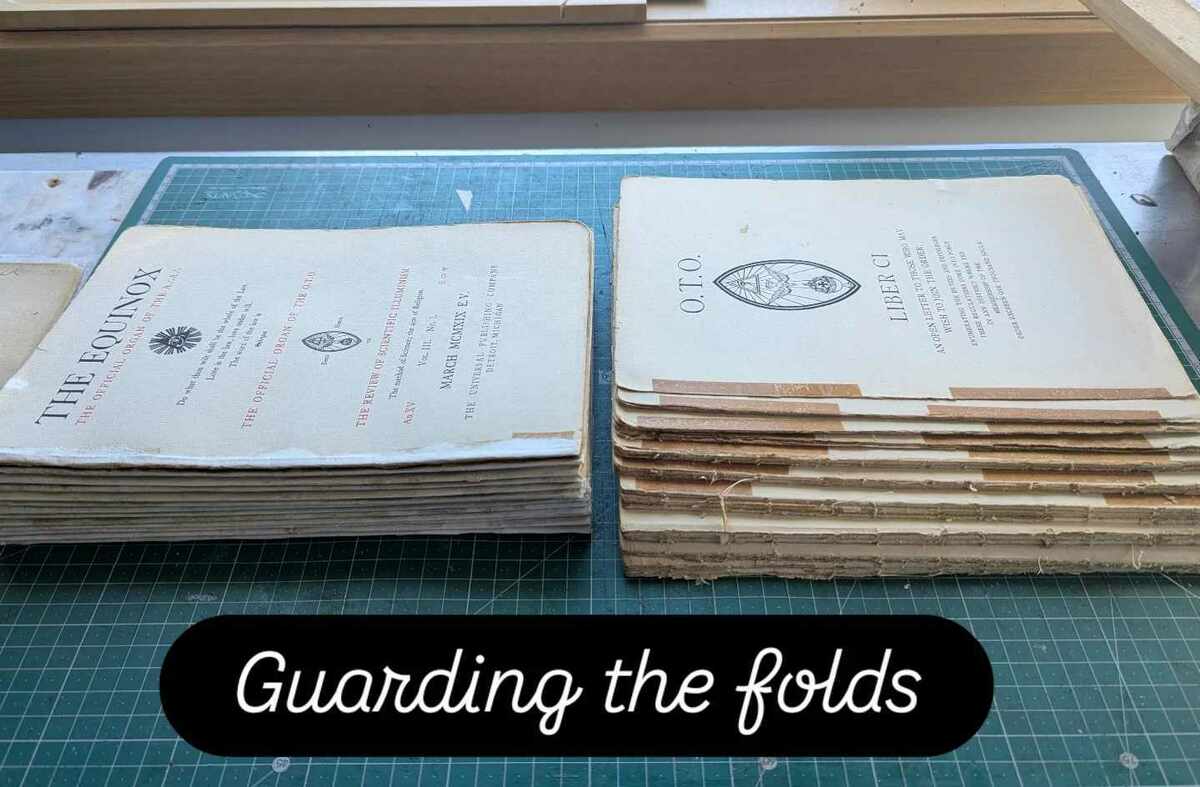
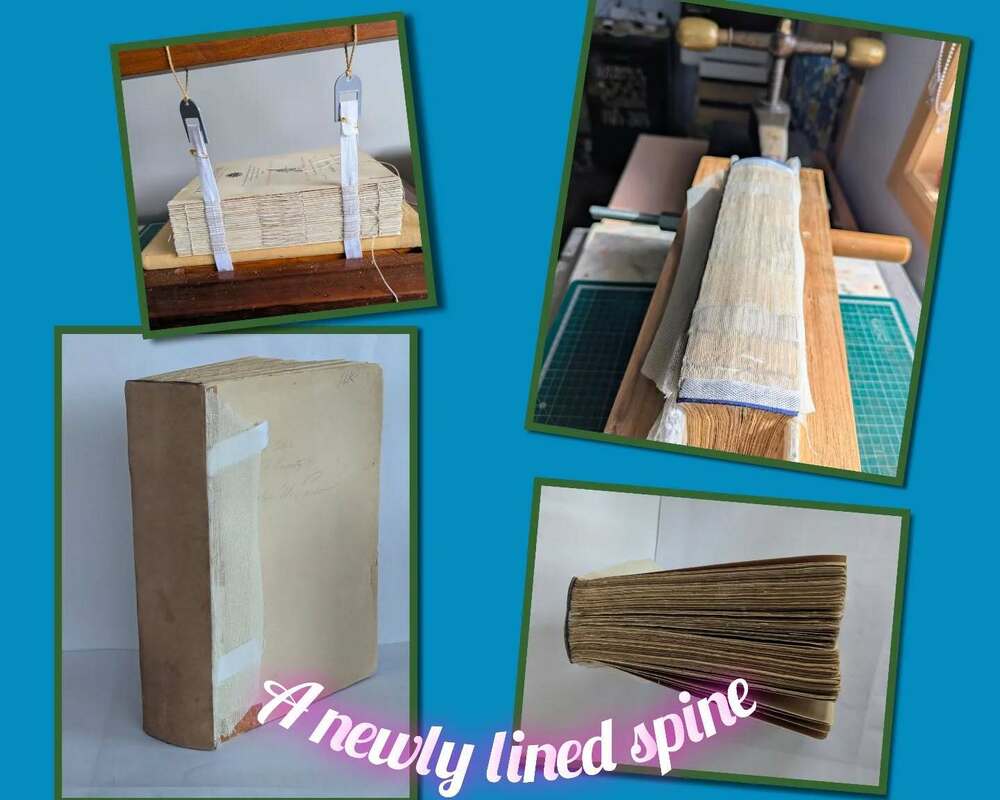
Stitching the Book Back Into Existence
The sections are brought back into alignment. Thread passes through paper in a rhythm that has remained unchanged for centuries.
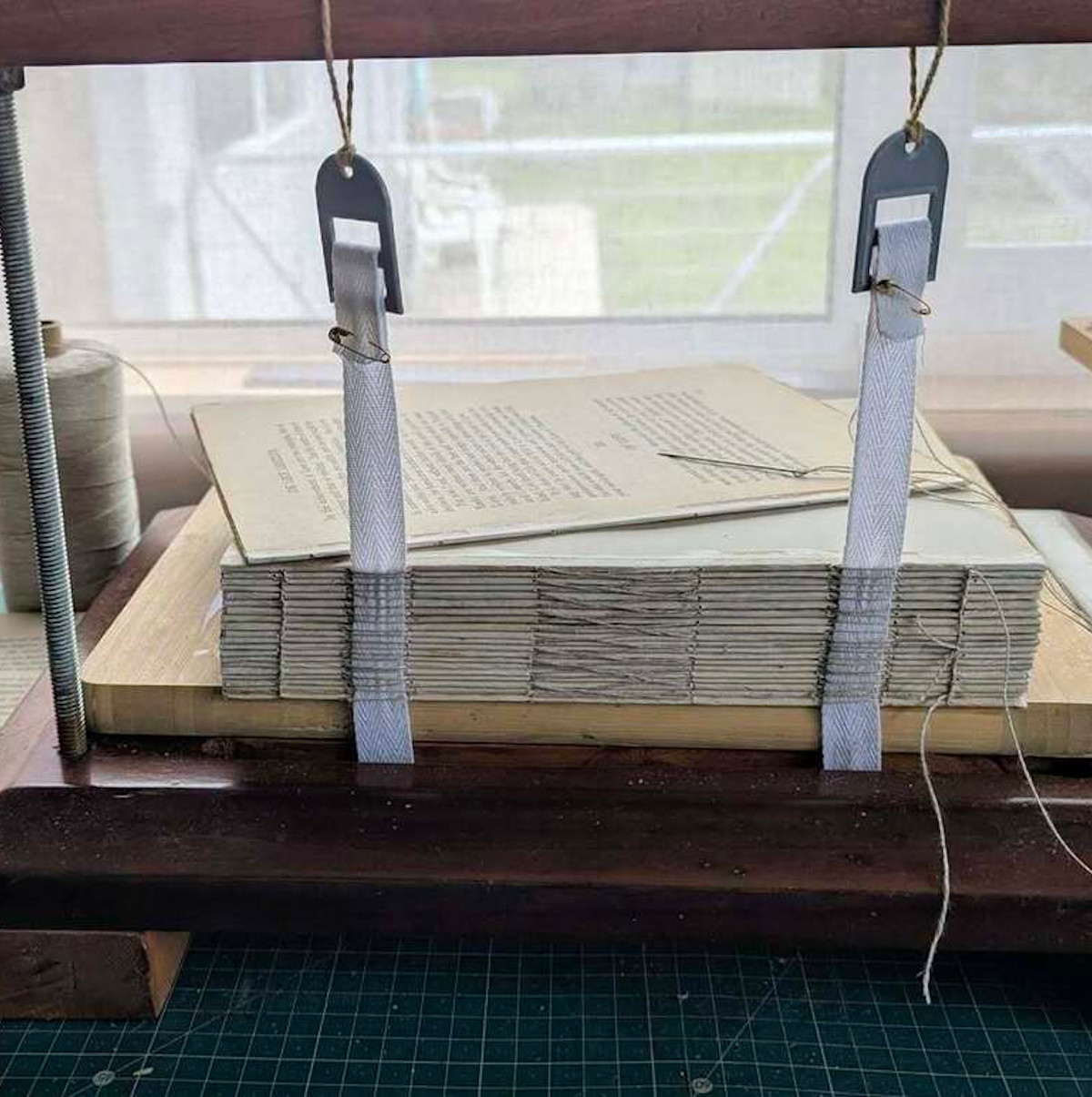
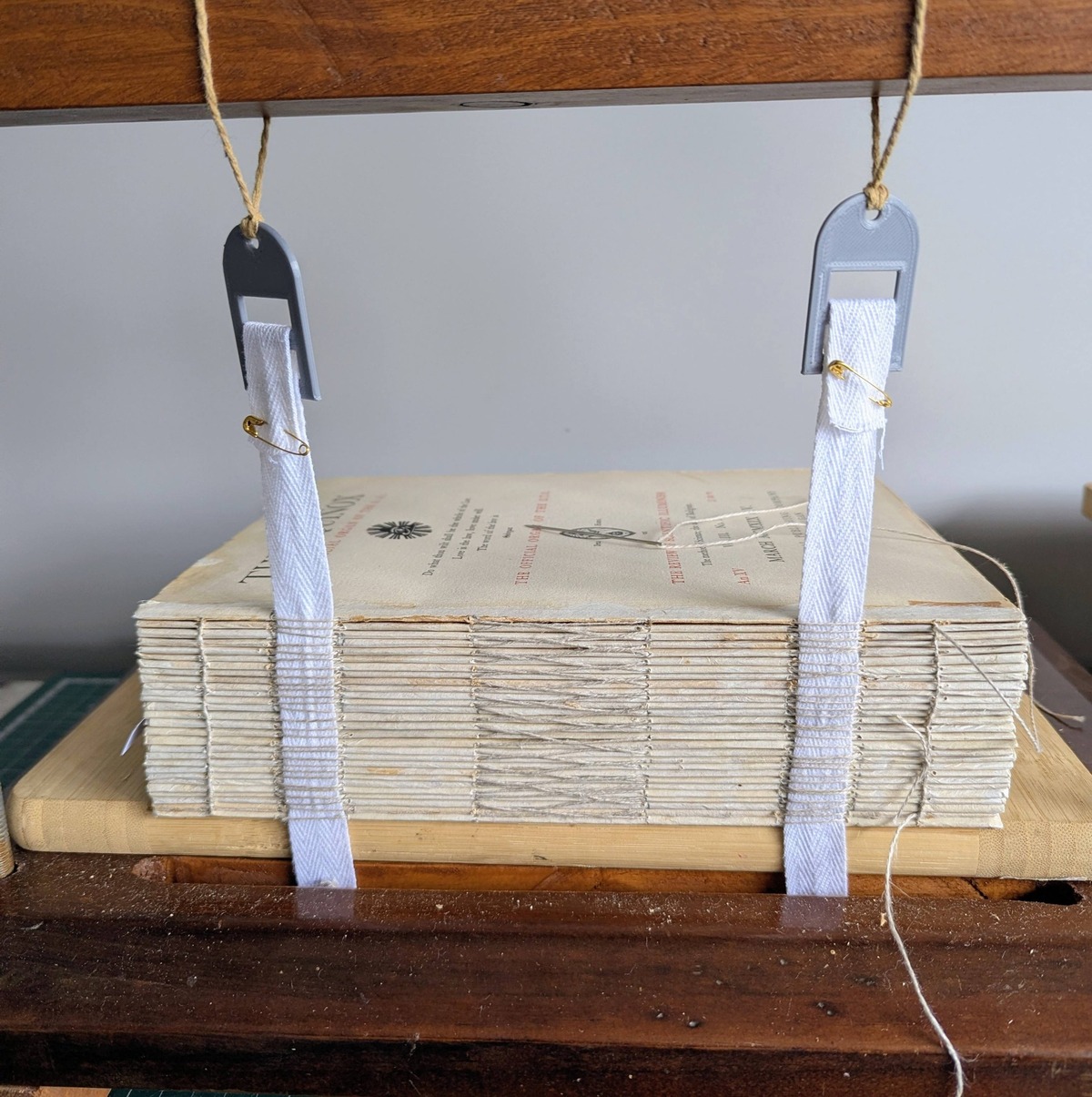
Mounted on the sewing frame, the book slowly regains its form.
This is the turning point. From here, the book begins to feel like a book again.
Reuniting the Past With the Present
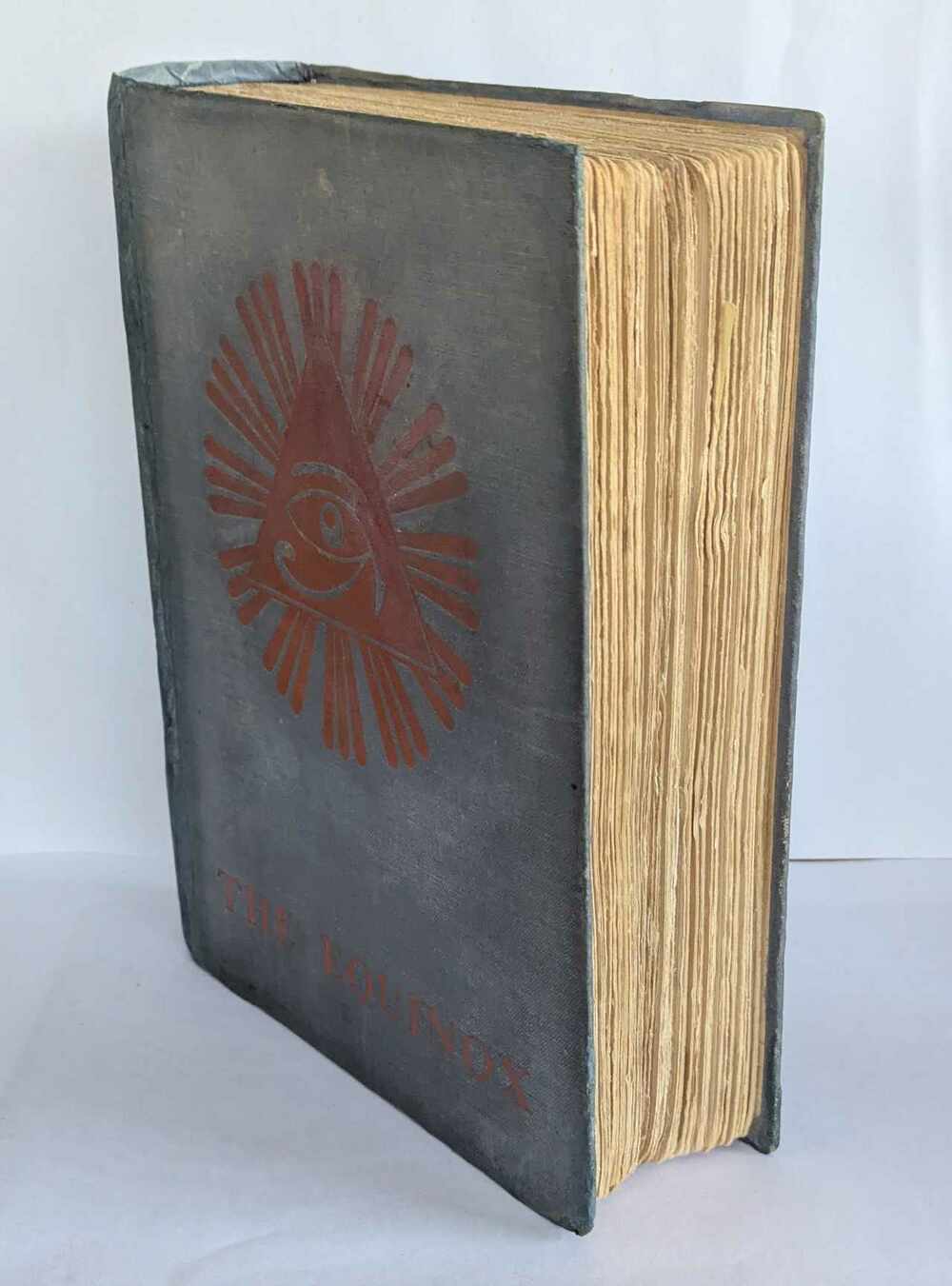
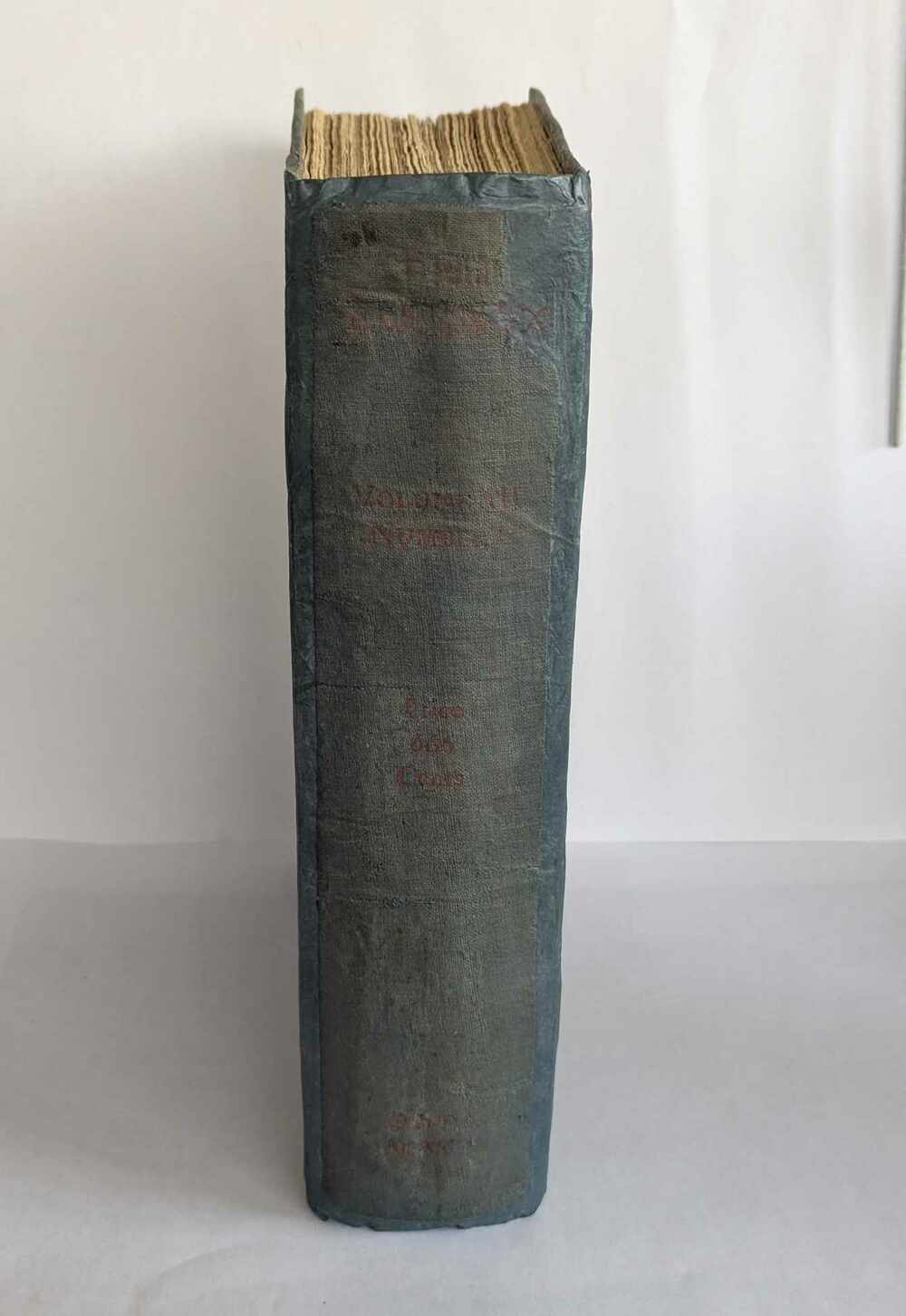
The original covers — worn, marked, undeniably authentic — are brought back into relationship with the restored text block. They are not replaced, not disguised, but reintegrated.
Their wear remains visible. Their history remains legible.
A Book That Lives Again
When the work is complete, the transformation is undeniable, but importantly, it does not look pristine.
Instead, it stands as something far more meaningful: a repaired object with a visible past and a secure future.
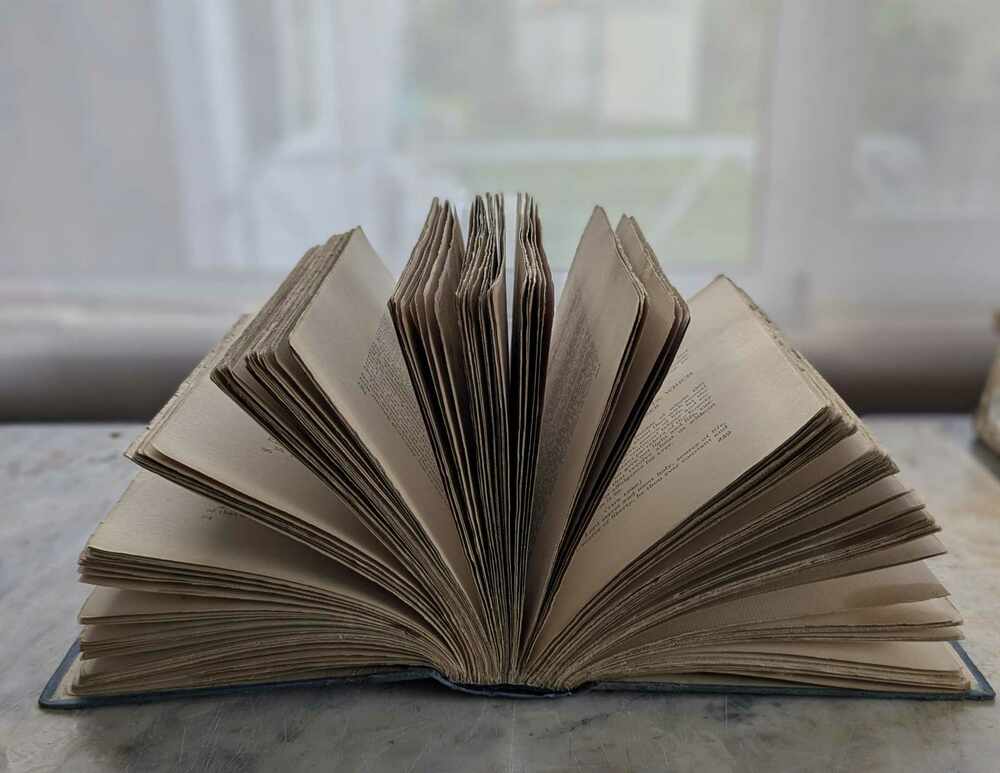
It can be opened again. Read again. Studied again.
Handled not as a fragile relic, but as a living document.
On the Restorer
This work was carried out by Dianne Charles of Crave Book Restorations, based in Stanley on Tasmania’s north-west coast.
Dianne’s practice sits at the intersection of craft, care, and quiet custodianship. A former librarian and lifelong reader, her work is driven not by commercial turnover, but by a deep respect for the physical life of books — particularly those that carry personal, historical, or cultural weight.